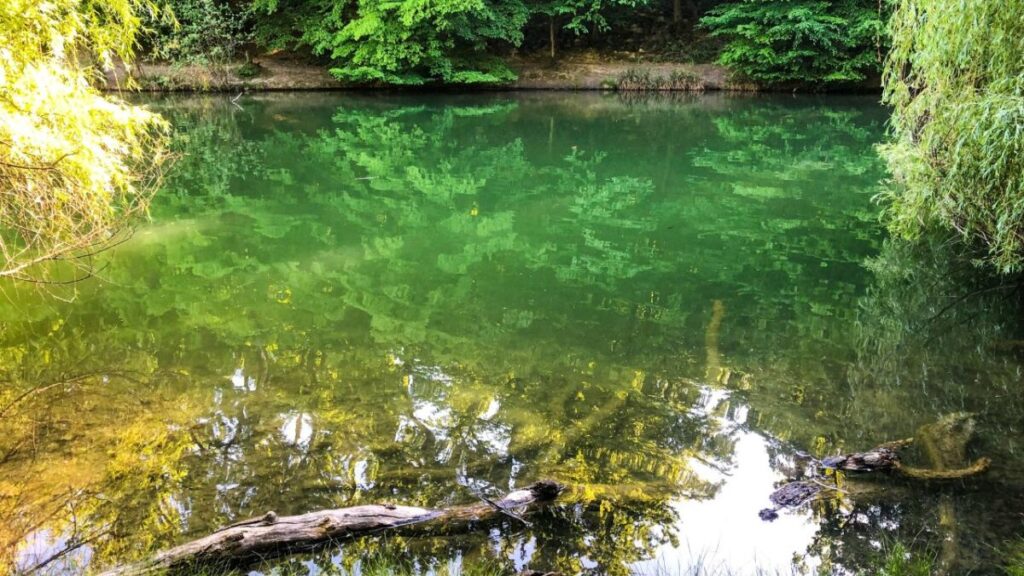
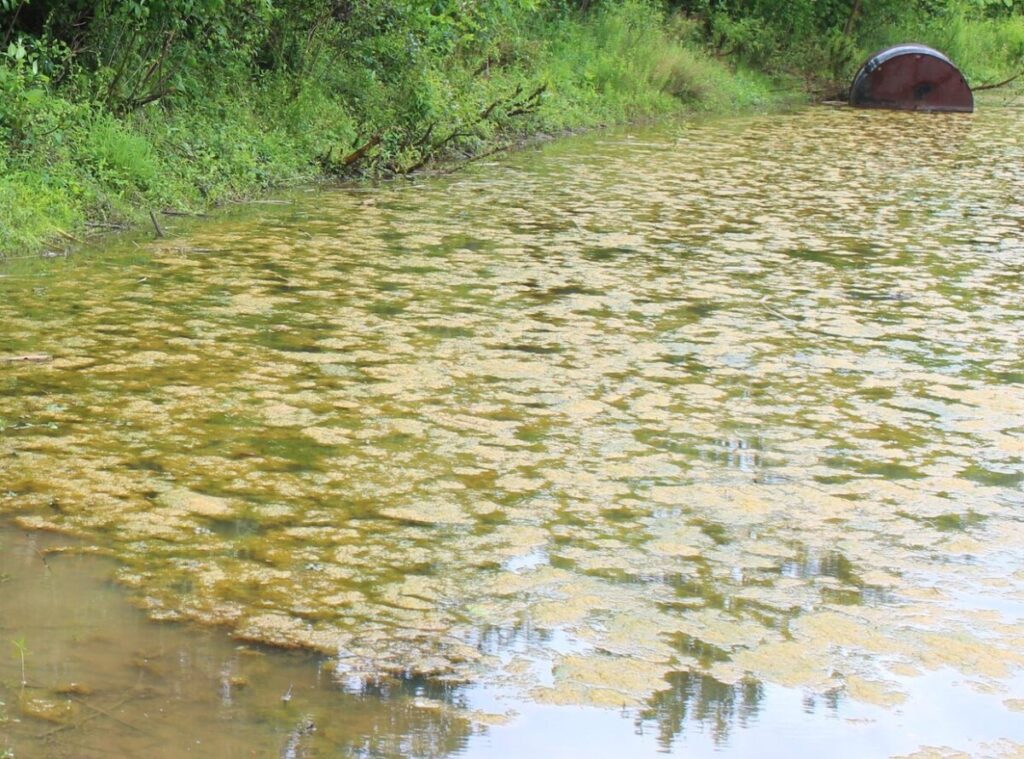
“Is that healthy green or a harmful bloom?” is a question we hear a lot in East and Middle Tennessee. Green pond vs harmful algae bloom is more than a color test, it’s about reading the water’s behavior and knowing when to step back. In a healthy pond, tiny phytoplankton tint the water a light, almost emerald hue and there’s no surface scum or harsh smell. When conditions tip the wrong way, cyanobacteria can take over and create paint-like streaks, pea-soup water, foamy mats, and odors that make you wrinkle your nose. If you see those signs, avoid contact, keep pets out, and follow public-health guidance.

What a “good” green looks like

A light green tint, normal fish behavior, and two feet or more of visibility usually point to a plankton community that’s doing its job in the food web. In freshwater, the organisms behind most problem blooms are cyanobacteria, which are different from the mixed plankton that support a balanced pond. That’s why the same color can mean two very different things.
Clear warning signs you shouldn’t ignore

Trust what you see and smell. Public-health agencies say to stay out of water that looks discolored, has paint-like streaks or scum, gives off a musty or rotten-egg odor, or has dead fish along the shore. Animals are especially vulnerable, so keep dogs away from suspicious water. In Tennessee, you can check state guidance or report a suspected bloom through TDEC and the Department of Health.
Why ponds tip from healthy to harmful

Warm, calm weather and extra nutrients create the perfect setup for blooms. Fertilizer overspray, eroding banks, and stormwater runoff feed cyanobacteria, which can multiply fast and sometimes produce toxins. EPA and USGS both point to nutrient control as the most effective long-term prevention, especially phosphorus.

Practical steps that actually help

Start with simple prevention. Reduce nutrient inputs from lawns and bare soil, and treat stormwater as a resource instead of a shortcut to the pond. EPA’s HAB guidance calls nutrient reduction the primary lever, and extension groups echo the same advice for neighborhood ponds.

Circulation matters too. Bottom-diffused aeration keeps the water gently mixed, holds oxygen near the sediments, and makes it harder for stagnant pockets to form. Land-grant fact sheets and water-quality notes describe aeration as a proven way to raise dissolved oxygen and reduce the conditions that let blooms surge. If your pond is shallow, a surface aerator can help; deeper coves benefit more from diffusers on the bottom.

When a bloom is already present, follow public-health guidance first. You can document the conditions, keep people and pets out, and then focus on prevention and recovery once the water clears. EPA’s control-measures page also outlines physical and chemical tools that managers consider after a bloom starts, along with their trade-offs.

How Aquatic Weed Wizards fits in

If you manage a backyard pond or private lakefront, you don’t have to guess your way through this. We design and install aeration and fountain systems, provide seasonal pond management, and handle shoreline fixes and sediment work when depth has vanished near the banks. If lab toxin testing is required for a public beach or drinking supply, we point you to state channels rather than claiming to operate a lab, because toxin verification belongs with public-health authorities.

What to do right now if the water looks off

Keep people and pets out, snap a few photos, and note recent weather. If you’re in Tennessee, review state guidance and advisories. Then get your pond on a prevention plan that focuses on nutrients, bank stability, and steady circulation so you spend less time guessing and more time enjoying clear water.

If you’re looking at green water and wondering which kind of green it is, get a plan in place. We can design the right aeration layout, set up routine visits, and fix the spots where sediment and erosion keep feeding the problem. Call 865-622-8282 or request a visit from our Tennessee team.

Learning about pond turnover warning signs and prevention should be on every Tennessee pond and lake owner’s agenda. When a pond “flips,” oxygen-poor bottom water and trapped gases like hydrogen sulfide rush to the surface, stressing fish and sometimes causing mass die‑offs. Here’s what pond turnover means, how to spot it early, the real dangers, and why bottom-diffused aeration is your best insurance policy.

Image Courtesy of Clean Lakes Alliance

What Is Pond (or Lake) Turnover?

During the summer, ponds stratify: warm, oxygenated water sits on top, while colder, low-oxygen water sinks. A sudden cold front, heavy rain, or strong winds can mix those layers in hours, a phenomenon known as turnover. The newly mixed water often has very little dissolved oxygen and may contain toxic gases, causing fish and beneficial microbes to suffocate.

Pond Turnover Warning Signs and Prevention (at a glance)

  • Watercolor shifts to gray or chocolate-brown and appears “soupy.”
  • Rotten-egg (sulfur) or swampy odors rise from the surface.
  • Fish gasp at the surface or congregate near inflows.
  • Bubbles or black muck burp from the bottom after a storm.
  • A recent cold snap, hurricane remnant, or downpour preceded the change.

Keeping the water gently mixed with bottom-diffused aeration prevents these crises by disrupting stratification before it gets dangerous.

Why Turnover Is Dangerous

When low-oxygen bottom water reaches the surface, dissolved oxygen levels can drop significantly within minutes. Anaerobic zones release hydrogen sulfide and ammonia. Both of which are toxic to fish at even tiny concentrations. The combination causes sudden fish kills, algae die-offs, and nasty odors.

How to Spot Trouble Early (And Act Fast)

  1. Sniff test: Sulfur or musty odors mean bottom water or decaying blooms are at the surface.
  2. Jar test: Scoop pond water into a clear jar. If it stays murky or green after 24 hours, you’re dealing with suspended solids or an active bloom that can crash oxygen when it dies.
  3. Watch the fish: Surface gasping or schooling near inlets is a sign of low oxygen levels.
  4. Meter it: A handheld DO/temp meter lets you see stratification and oxygen drops before fish feel it.

If readings drop below ~3 mg/L, start emergency aeration (using gas-powered pumps or surface fountains) and consult professionals for a recovery plan.

Preventing Pond Turnover (and the Bills That Follow)

  • Install bottom-diffused aeration: A compressor on shore sends air to diffusers on the bottom, constantly circulating the water column. This “de‑stratifies” the pond and keeps oxygen near the sediments.
  • Reduce nutrient loading: Fewer nutrients mean fewer algae blooms and less decaying muck to strip oxygen during mixing events.
  • Schedule monthly inspections: After major storms, inspect inlets/outlets, note any odors, and log changes in clarity—small clues can prevent significant losses.
  • Plan winter strategies: Even ice-country ponds can flip when snow blocks light and oxygen; aeration keeps an opening and circulation under ice.

What Aquatic Weed Wizards Can Do

Serving East & Middle Tennessee, we design and install bottom-diffused aeration as well as provide monthly stormwater/pond inspections so turnover never blindsides you. Need help now? Call 865‑622‑8282 or request a site visit.

A pond that smells bad is more than a backyard nuisance; it signals a chemical problem that can lead to fish kills, code violations, and costly dredging work. Across East and Middle Tennessee, homeowners and HOAs most often notice three distinct odors—rotten egg, musty earth, and fresh-cut grass—and each points to a different water-quality emergency. Understanding the cause lets you act quickly and call in Aquatic Weed Wizards for the proper fix before minor funk turns into a full-blown crisis.

Rotten-Egg Smell (Hydrogen Sulfide)

When the bottom of a pond loses oxygen, anaerobic bacteria break down the muck layer and release hydrogen sulfide gas, the same sulfur odor found in sewers. A thunderstorm that suddenly mixes deep water with surface water can burp that gas upward and stress or kill fish within hours. Installing a bottom-diffused aeration system restores oxygen at the sediment line and allows toxic gases to escape harmlessly into the air. In severe cases, AWW recommends hydro-raking or winter mechanical dredging to remove the partially decayed organic layer that continues to produce hydrogen sulfide.

Dredging a pond

Musty or “Basement” Smell (Geosmin and 2-MIB)

An earthy, damp-basement odor usually indicates that cyanobacteria or certain soil bacteria are releasing trace compounds called geosmin and 2-methylisoborneol. Humans can detect these chemicals at parts-per-trillion, so a light bloom is all it takes to make the whole shoreline smell off. Warm, stagnant water in small detention ponds is the perfect incubator, which is why late-summer HOA ponds, from Knoxville to Murfreesboro, often develop the scent. Boosting circulation with a fountain or converting to push-flow aeration strips the odor and prevents cells from clustering. A peroxide-based algaecide can knock down odor-producing algae and even chemically convert geosmin to an odorless form .

Fresh-Cut-Grass Smell (Active Algae Bloom)

If the water smells like you just mowed the lawn, a live planktonic algae bloom is underway. One inch of rain can wash enough lawn fertilizer into a one-acre pond to trigger a bloom in just two days. A simple jar test—scooping pond water into a clear jar and checking whether it remains green after twenty-four hours—reveals whether the bloom is free-floating rather than settling with sediment. Alum or newer phosphorus-binding treatments, such as Phoslock®, lock up excess nutrients and sink the bloom’s food supply. Spot herbicide on shoreline mats, followed by aeration, prevents a nighttime oxygen crash that could harm fish.

Why Quick Action Matters

Fish kills triggered by hydrogen sulfide or sudden oxygen crashes devastate pond ecosystems and smell even worse. Tennessee stormwater rules list objectionable odors as a type of nuisance discharge, putting HOA boards at risk of citations when ponds emit unpleasant odors. Real estate studies show that recurring algae blooms and foul odors can cut lakefront property values by ten percent or more.

What Aquatic Weed Wizards Can Do for You

We start with a same-day dissolved-oxygen and nutrient test to pinpoint the source of the smell, then design an immediate solution—whether that is aeration, selective herbicide, or sediment removal—to restore healthy conditions fast. Monthly follow-up visits track progress until your pond is clean, clear, and odor-free again.

Ready to breathe easy? Call 865-622-8282 or request a quote today and let our local team keep your Tennessee pond fresh and healthy year-round.

Seed banks for summer blooms
Cyanobacteria don’t vanish in winter—they hibernate in sediments. This overwintering cyanobacteria preventative HAB management guide sampled three USACE reservoirs (KS & OK) and found 85 % of sites contained resting-stage cells; 54 % produced ≥ 100,000 cells mL-1 in lab incubations—enough for a full-scale bloom.

Two-line-of-evidence framework
1. Sediment enumeration of resting cells.
2. 14-day incubations to confirm growth potential.
Combining both lines lets managers rank coves and schedule winter algaecide or dredging before blooms erupt.

Weight-of-evidence scoring
The authors provide a red-yellow-green logic table that flags hotspots where sediment treatment will delay spring blooms the most. Marion Reservoir topped the risk list, while Heyburn Lake scored lowest.

Takeaways for Tennessee ponds and lakes

  • Sampling just two cores per cove captured 80 % of hotspots.
  • Bottom-diffused aeration reduced benthic cell survival in trials.
  • Winter treatments bought an extra 4–6 weeks of bloom-free recreation time.

Use this overwintering cyanobacteria preventative HAB management framework to build a winter action plan for HOA ponds or TVA reservoirs.

Download the full PDF to get the lab protocols, scoring template, and case-study numbers.

What the study covers

This urban pond harmful algal bloom study tracked five retention ponds in Northern Kentucky for a full year and measured both cyanobacterial cell counts and microcystin toxin levels. Researchers from the U.S. EPA and Northern Kentucky University found that 75 % of samples exceeded WHO’s 20,000 cells mL-1 HAB threshold while 66 % topped the 4 ppb microcystin health limit. Yet toxin spikes didn’t always match high Microcystis counts, challenging the “cells = toxins” rule of thumb.

Key findings

  • HABs occurred year-round—even at 3 °C in January.
  • Microcystin hit 1,286 ppb during the coldest sample event.
  • No single water-quality factor (pH, DO, nutrients) predicted bloom toxicity.
  • Ponds with vegetated buffer zones recorded milder blooms.

Why it matters for East & Middle TN managers
Small HOA and storm-water ponds in Tennessee share the same shallow, nutrient-rich profile as the Kentucky sites. This urban pond harmful algal bloom study shows why January can be just as risky as July—and why monitoring must track toxins, not just cells.

Download the full PDF to see the data tables, WHO comparisons, and practical design tweaks (buffer width, aeration) that cut bloom severity.

Stormwater pond sediment renovation isn’t optional maintenance—it’s the reset button that keeps neighborhood detention basins safe, compliant, and good-looking. Engineers design these ponds with a built-in lifespan, and every thunderstorm shaves time off the clock. National studies show that most stormwater ponds require a major sediment clean-out or renovation about 15 years after construction, sometimes sooner in fast-growing neighborhoods.

Why Sediment Accumulates Faster Than You Think

  • New Roofs & Pavement
    Each new driveway or rooftop speeds up runoff, carrying more solids into the pond.
  • Eroding Banks & Lawns
    Mower scalping and missing shoreline plants expose bare soil that slides in during heavy rain.
  • Leaf & Mulch Blow-Ins
    Landscapers often blow debris toward open water, adding organic muck that decomposes into more sediment.

A Canadian case study logged 600 m³ of sediment in just 14 years—enough to cut the pond’s storage by nearly a third.

The 15-Year Renovation Clock—Regulatory & Practical Drivers

Stormwater manuals from Tennessee counties echo federal guidance: once a pond loses 25–50 percent of its design depth or can no longer meet peak-flow targets, owners must restore it. Many HOA covenants hard-bake the same rule, and county inspectors can issue violation letters if inflow pipes are buried or the emergency spillway is submerged.

Even without official pressure, reduced capacity shows up in everyday headaches:

  • Driveways or cul-de-sacs flood after routine summer downpours.
  • Mucky shallows breed mosquitoes and smell like sulfur.
  • Algae blooms erupt because nutrient-rich sediments act like slow-release fertilizer.

Five Signs Your Pond Has Hit Middle Age

  1. Visible Delta Fans — Sediment islands form where pipes discharge.
  2. Waterline Creeping Up the Outfall — The stand-pipe riser is half hidden instead of fully exposed.
  3. Vegetation Change — Cattails and water-shield colonize new shallows that used to be open water.
  4. Mucky Footing at the Bank — A simple probe with a measuring rod reveals a foot or more of soft sludge before you hit firm bottom.
  5. Bathymetry Gap — Your original as-built plans show 6 ft depths, but today’s depth map reads 3 ft or less in key cells.

Spotting two or more of these cues means it’s time to price a renovation.

Renovation & Dredging Options

Full-Scale Hydraulic Dredging

A floating dredge vacuums sediment to geotextile dewatering bags placed on common ground. This method keeps the pond in service and minimizes turf damage—ideal for HOAs with limited shoreline access.

Mechanical or Dry Dredging

If the pond can be drawn down and access roads installed, excavators can remove material directly. It’s noisy but fast, often chosen where sediment is too dense for pumps.

Forebay Construction

During renovation, consider scooping out a shallow forebay near the main inlet. Future sediment drops here first, cutting full-pond dredging frequency to every 20–25 years.

Aeration & Shoreline Re-Planting

Restoring pond depth is only half the job. Bottom-diffused aerators keep new sediments from going anoxic, while wide native plant buffers pin soil in place and soak up nutrients that would otherwise settle out again.

The Cost Factor—Budgeting Smart

Rule-of-thumb pricing runs $20–$40 per cubic yard removed, depending on dewatering method and dump-site distance. A 1-acre pond losing 2 ft of depth may hold 3,000 yd³ of muck, translating to $60–$120k. Staggering costs with partial dredges or sediment trapping can soften the blow over time.

How Aquatic Weed Wizards Extends Your Pond’s Lifespan

Our veteran-owned team handles every phase—from sonar bathymetric surveys that quantify how much muck you have, to turnkey dredging, to post-renovation management plans that slow future buildup:

  • Sediment Surveys & Permitting: Accurate volumes plus state and county compliance paperwork.
  • Hydraulic & Mechanical Dredging: The best method for your site and budget.
  • Shoreline Stabilization: Native grass buffers, rip-rap armoring, and live-stake plantings.
  • Ongoing Maintenance Packages: Quarterly inspections, debris skimming, and nutrient-reduction algaecide programs.

With a Tennessee Department of Agriculture Charter (#5171) and deep experience across East and Middle Tennessee, we keep HOA boards, property managers, and industrial owners in good standing, and ponds performing like new.

Don’t Let Sediment Steal Your Storage

A stormwater pond is an engineered asset, not a forever fix. The 15-year renovation clock is real, but timely dredging and smart shoreline upgrades can reset it. Need to know where your pond stands? Call Aquatic Weed Wizards at 865-622-8282 or request a quote today. We’ll map the muck, plan the fix, and keep your water ready for the next big storm—and the next 15 years.

When the thermometer climbs past 90 °F and afternoon thunderstorms roll across Tennessee, a silent chemistry experiment takes place in every drainage ditch and storm-water pipe. Nutrient-rich lawn and farm fertilizers wash straight into our ponds and coves, kicking off summer fertilizer runoff eutrophication—the rapid, human-driven version of a process that normally takes centuries. The result? Murky water, fish gasping at dawn, and invasive weeds that turn boat slips into jungles.

What exactly is cultural eutrophication?

Eutrophication happens naturally as lakes age and fill with organic matter, but cultural eutrophication is what we accelerate through over-fertilizing, soil erosion, and poorly managed stormwater. Nitrogen and phosphorus are the lead actors; give them warm water and plenty of sunlight and they’ll trigger algae blooms, strip oxygen, and devastate aquatic life.

Why Summer Is the Danger Zone

Thunderstorm Flash-Floods

Intense, fast-moving storms common from June to August push freshly applied fertilizer off yards, pastureland, and golf fairways into waterways.

Sun-Baked Soil

After several scorching days, clay soils become hydrophobic. Instead of soaking up rain, they shed it—along with dissolved nutrients—like pavement.

Warm Water Chemistry

Hot water holds less dissolved oxygen. Even a modest nutrient pulse can push oxygen levels to critical lows overnight.

Real-World Consequences You’ll Notice This Season

These effects aren’t confined to big reservoirs—smaller HOA ponds and farm lakes feel the same punch, just on a tighter timeline.

Five Early Warning Signs

Look for these clues in late June and July:

  1. Secchi-disk clarity drops below 18 inches.
  2. A vivid green film coats the water the morning after a storm.
  3. Fish hover near the surface at dawn, gasping for air.
  4. Afternoon pH spikes above 9.0.
  5. Hydrilla, milfoil, or water-shield patches creep farther from shore than last year.

Two or more of these signals mean trouble is brewing.

How to Slow the Surge

On-Land Source Control

  • Choose slow-release, low-phosphorus fertilizers—or skip summer applications altogether.
  • Ring the shoreline with a 10- to 20-foot buffer of native grasses and wildflowers to trap runoff.
  • Swap compacted turf walkways for permeable pavers or install rain gardens in drainage swales.

In-Water Solutions

  • Alum or iron-sulfate treatments lock up free phosphorus, starving algae quickly.
  • Bottom-diffused aeration keeps oxygen levels stable and curbs internal nutrient cycling.
  • Surface fountains add circulation and curb odors while delivering HOA-worthy aesthetics.

Monitor Like a Pro

Monthly checks of pH, dissolved oxygen, and nutrient levels reveal small changes before they demand big dollars. Pair water testing with an annual depth survey to track sediment gain and schedule dredging before serious capacity loss.

Where Aquatic Weed Wizards Fits In

Our veteran-owned crew tackles eutrophication at every stage:

  • Lake Management → Seasonal weed and algae control large and small bodies of water.
  • Pond Management Packages → Turnkey programs featuring aeration and lab-grade water testing—all sized for your goals.
  • Aeration & Fountains → Otterbine® surface, subsurface, and decorative units custom-sized for East and Middle TN ponds.
  • Dredging & Pond Repair → Sediment removal, dam-leak fixes, and shoreline stabilization to reset your nutrient clock.

Our Tennessee Department of Agriculture charter (#5171) guarantees safe, compliant herbicide and algaecide applications.

Take Back Your Water Before Peak Bloom Season

Summer doesn’t have to turn your lake or pond into a liability. By cutting nutrient inputs on land, boosting oxygen in the water, and staying on top of testing, you can keep that shimmering, Instagram-ready shoreline all season long.

Need a personalized plan? Call Aquatic Weed Wizards at 865-622-8282 or request a quote today, and let’s keep Tennessee’s waters clear, healthy, and ready for every humid minute of summer.

Why winter pays off for sediment removal

This winter, the mechanical dredging stormwater pond case study follows Pond 51 in Vaughan, Ontario—13.4 ha of mixed residential and commercial drainage that was 35 % full of sediment after 15 years. By draining the pond in December, contractors used two 3-tonne excavators to scoop out semi-frozen muck, thereby avoiding the need for polymer additives and shortening the drying time.

Inside the PDF you’ll find:
• Bathymetric data showing 468 m³ of accumulated sediment pre-clean-out.
• A 3-week schedule—from site prep to restoration—despite an early-December thaw that complicated access.
• Lessons on keeping the clay liner intact and using on-site freeze-dry areas.

Whether you manage a detention basin in Knoxville or Nashville, the winter mechanical dredging stormwater pond approach can trim budget and wildlife impacts when done right.

Your step-by-step stormwater BMP maintenance guide

Produced by Montgomery County, Tennessee, this stormwater maintenance guide explains every task, from monthly litter sweeps to 5-year engineer inspections required by county code. It bundles:
• Checklists for ponds, swales, permeable pavement, and bioretention cells.
• Legal duties under Stormwater Resolution #13-2-2, including structural BMP certifications.
• Tables that map inspection frequency (Monthly, Semi-annual, After Major Storms) to routine tasks.

This mobile-friendly PDF empowers HOA boards to maintain accurate records, budget for necessary dredging, and avoid receiving violation letters. Download the stormwater BMP maintenance guide and put regulatory headaches to rest.

Is your pond quietly failing?

The Illinois EPA’s Lake Notes series identifies ten key indicators—turbidity, algae blooms, eroding banks, and sediment deltas—that signal it’s time for detention pond degradation solutions. You’ll learn:


• How construction-site runoff can dump 100 tons / acre / year of sediment into basins.
• Shoreline bio-engineering fixes: fiber rolls, native wetland plants, and 5:1 slopes.
• Maintenance to-do’s from outlet-pipe debris checks to annual vegetation audits.

If brown water and slumping banks are killing curb appeal, grab this detention pond degradation solutions PDF and compare it to your own HOA lake.